Garage Door Repair: Repair or Replace? How Westerville Homeowners Decide
Most homeowners assume age decides it: past a certain birthday, the door goes. That’s the wrong variable. A 20-year-old steel door with straight panels and working hardware is often worth repairing, while a 10-year-old door with two bent panels and a warped bottom section may not be – because bent panels change how the door’s weight is distributed across every section, and that imbalance grinds down the rollers, hinges and springs faster. The real decision comes down to three things: structural integrity, parts availability, and your plans for the house. If you’d rather not work through that yourself, call us at (855) 771-0571 and we’ll give you a straight answer with a free estimate.
What does the panel integrity test actually tell you?
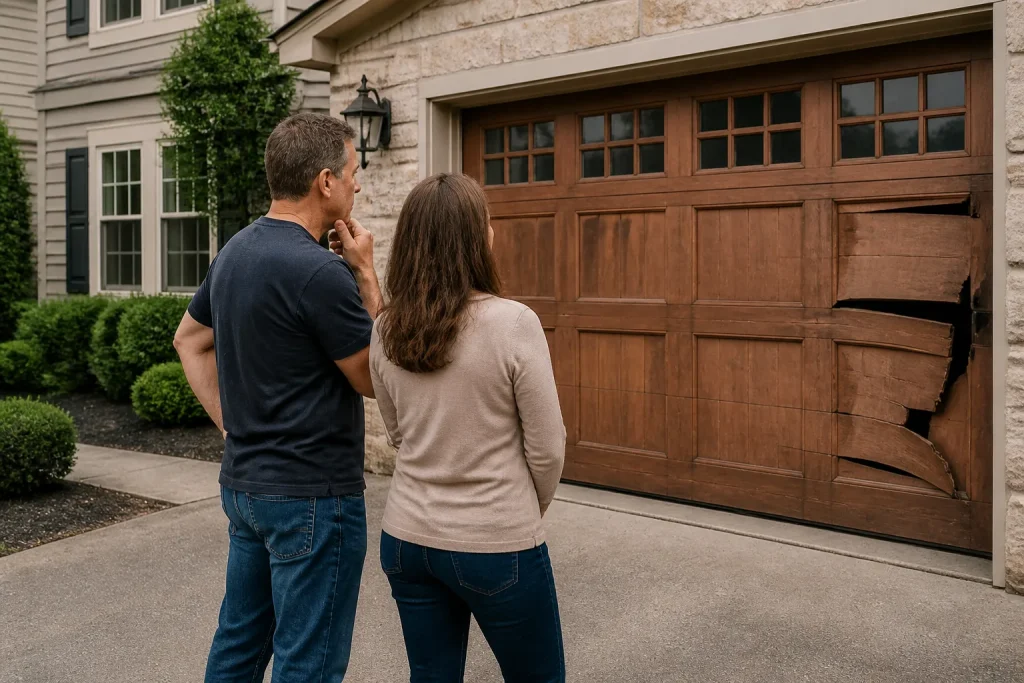
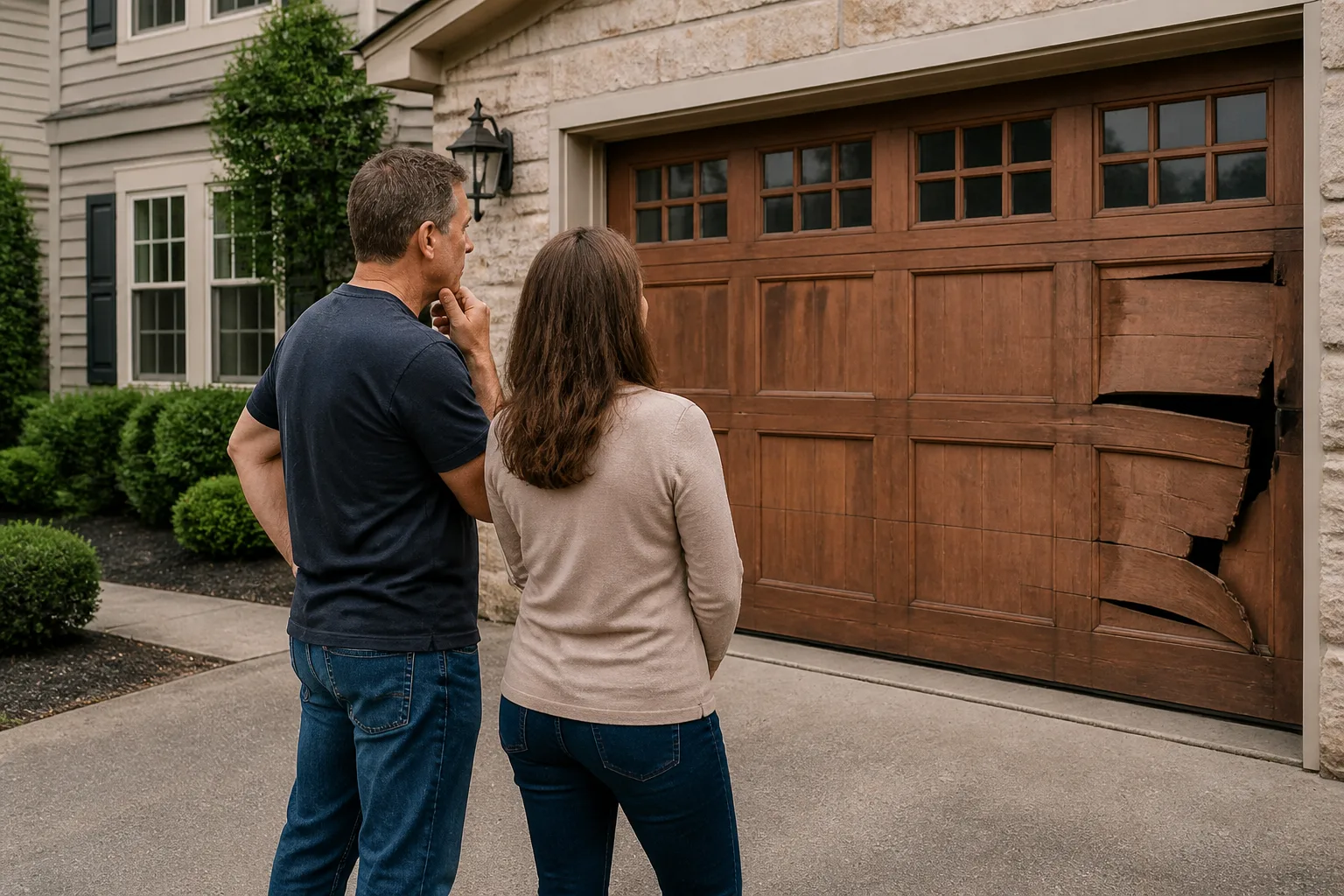
Panel integrity is the structural threshold that changes the repair math, and it matters more than the door’s age. A sectional garage door carries its weight across horizontal panels joined by hinges, and every panel shares that load. Bend one panel and the load shifts to its neighbors. The door still opens, so nothing looks urgent, but the misalignment works on the rollers, hinges and springs every time the door cycles. That’s why a door with visible panel damage can wear out its hardware faster than an older door with clean panels.
Here’s how to check your own door without touching the moving parts:
- Look down the door from inside, with it closed. The horizontal lines between panels should run straight and parallel. A gap that’s wider at one end than the other means the sections are out of alignment.
- Check the panel faces for creases or dents that cross a hinge line. A dent in the middle of a panel is mostly cosmetic. A crease that runs into the hinge area has changed how that joint moves.
- Run the door and watch the gap between the bottom section and the floor. If one corner lifts before the other, the door is racking.
- Push gently on each panel with the door closed. Flex where the panel should be rigid points to a bent section or a loose hinge.
In our experience around Westerville, the doors that get replaced too early are usually the ones with a single dented panel and otherwise sound hardware. The doors that get repaired too long are the ones with a bent bottom section quietly pulling the whole track out of line.
Why does parts availability matter more than door age?
Parts availability is where age starts to matter – but as a proxy, not a rule. Doors manufactured before roughly 2005 often have discontinued hardware, and that makes repair costs unpredictable in a way that’s hard to estimate over the phone. A hinge you can’t source becomes a fabricated bracket. A roller profile that’s no longer made turns a simple swap into a track adjustment. The door isn’t necessarily beyond saving; the cost just stops being predictable.
You can check this yourself before you commit to anything:
- Find the manufacturer’s label, usually on the inside of the bottom section or on the end stile. Note the brand and any model number on it.
- Write down the brand name and call a garage door specialist with it. We service eight major brands, including Clopay, Amarr, Wayne Dalton and Raynor, and can tell you whether the hardware is still available.
- Ask specifically about hinges, rollers, the bottom seal and the spring assembly – those are the parts that wear first and the ones most likely to be discontinued.
- If two or more of those are unavailable, treat the door as a replacement candidate unless the panels are immaculate.
Brand knowledge shortens this step considerably. A technician who works with LiftMaster, Chamberlain, Genie and Clopay systems every day recognizes a discontinued hinge from across the garage. One who doesn’t will order the wrong part and come back twice. Our Garage Door Repair Westerville team carries that brand recognition into every estimate.
How do you apply the 50% rule to a garage door correctly?
You apply the 50% rule by comparing the repair quote to the installed cost of a new door, not the sticker price of the door itself. Most homeowners get this wrong. They see a $1,200 door at a home center and think a $700 repair is over half the replacement cost, so they replace. But that $1,200 door still needs installation labor, new track and hardware, hauling the old door away, and often a new opener to match. The real replacement number is meaningfully higher, and the repair looks very different against it.
Here’s the calculation in plain terms. Add up the replacement door, the installation labor, the disposal of the old door, and any opener work bundled in. That total is your denominator. Divide your repair estimate by it. Under 50%, repair usually wins. Over 50%, replacement starts to make sense – but only if the panels and track are also sound. A repair quote that’s 40% of replacement cost on a door with a warped bottom section is still throwing money at a door that will need replacing soon anyway.
We put the numbers in writing before any work starts, so you can run the math yourself instead of taking our word for it. The written estimate is the price – it doesn’t move once the job begins.
How should you weigh repair versus replacement if you might sell?
If you’re selling in the next five years, curb appeal math often favors replacement even when repair is cheaper. Real estate agents and appraisers walking a Westerville home note the garage door because it’s the largest moving object on the exterior and the first thing a buyer sees from the street. A door with mismatched panels or dull, oxidized paint reads as deferred maintenance, and buyers price that in. A clean, matched door reads as a home that’s been looked after.
That doesn’t mean replace every time you list. It means weigh the door differently than you would if you were staying. If the panels are sound and the paint is intact, a repair keeps the door looking right and costs less than a replacement you’ll never personally enjoy. If the panels are mismatched, the bottom section is warped, or the style is decades out of step with the neighborhood, replacement tends to return more at sale than repair ever will.
One practical note: a properly balanced door with a quiet opener is something buyers actually notice when they walk through. A door that shudders and clunks on the way up gets remembered. If you’re prepping to list, get the hardware and the opener sorted before the photos are taken.
Why should the opener be evaluated separately from the door?
The opener should always be evaluated on its own because it’s a separate machine with its own lifespan. An old door with a newer opener is a very different calculation than an old door with its original opener. The newer opener is an asset sitting on a door that may need replacement, and that changes the math in your favor. The original opener is a liability sitting on a door you may keep, and it will likely fail before the door does.
What to look for on the opener itself:
- Age and drive type. Chain drives are loud and durable; belt drives are quieter. A newer belt drive on an older door is a good sign.
- Safety reversal. The opener should reverse when it meets an obstruction. If it doesn’t, that’s a stop-and-fix issue, not a someday issue.
- Force settings. An opener that’s been turned up to force a binding door up is masking a door problem. Fix the door, then reset the opener.
- Smart features. A LiftMaster or Chamberlain unit with app control and battery backup changes the value equation on the whole system.
If the opener needs work, that’s a job on its own, and garage door opener repair is something we handle across the top brands – from entry-level Craftsman units to smart-home-integrated LiftMaster systems.
When should you call a pro instead of deciding yourself?
Call a pro before you touch a torsion spring, a cable, or anything under tension. Those components store enough energy to cause serious injury, and they’re the ones most likely to be the actual source of a door that seems to be failing structurally. A door that’s hard to lift, slams down, or won’t stay halfway up usually has a spring problem, not a panel problem, and that’s a repair, not a replacement.
We’d also want a look if you’re unsure whether the panels are structurally sound, if the door is racking or binding, or if you’re weighing repair against replacement near the 50% line. Our technicians have up to 9 years of experience and work on garage doors only, so the diagnosis is usually quick. Spring work in particular is dangerous enough that it belongs with a specialist – see our garage door spring repair page if that’s the noise you’re hearing.
If the door is stuck open and the house isn’t secure, or a car is trapped inside, that’s an emergency, and emergency service is a core part of what we do, not an upsell. One call covers it, and you won’t need to hunt down a second company.
Related services in Westerville: garage door repair for panels, tracks, rollers and hinges; opener diagnostics and replacement; spring and cable work; and full new-door installation if the repair math tips toward replacement.
The Bottom Line
The repair-or-replace decision isn’t about age. It’s about panel integrity, parts availability, and your plans for the house. A sound-paneled door with available hardware is usually worth repairing regardless of how old it is. A damaged-panel door with discontinued parts is usually a replacement, even when it’s younger than you’d expect. Apply the 50% rule to the installed replacement cost, evaluate the opener on its own, and let your five-year plan settle any close call.
If you’re in Westerville and need help deciding, Garage Door Repair Westerville offers free estimates – call (855) 771-0571. We’ll check the panels, verify parts availability on your exact brand, and put the price in writing before anything starts. Our technicians have up to 9 years of experience, and garage doors are all we do – so the diagnosis is the first time, not the second.
Frequently Asked Questions
Repair is usually the better call on a 15-year-old door if the panels are straight and parts are still available. Panel integrity and parts availability decide it, not the age. Apply the 50% rule to the installed replacement cost; under 50%, repair typically wins. Call (855) 771-0571 for a free estimate on your specific door.
Look down the closed door from inside and check that the gaps between panels run straight and parallel, and check for creases that cross a hinge line. A wider gap at one end, or a bottom corner that lifts before the other, means the sections are out of alignment. That’s when repair math changes. Call (855) 771-0571 and we’ll confirm it for free.
Sometimes. Doors made before roughly 2005 often have discontinued hinges, rollers or bottom seals, which makes repair costs unpredictable. Find the manufacturer’s label inside the bottom section and call us with the brand – we service eight major brands including LiftMaster, Chamberlain, Genie and Clopay, and can tell you what’s still available. Call (855) 771-0571 for a free estimate.
No. The written estimate sets the price, and it’s quoted and agreed before any work starts. If we find something that changes the scope, we tell you first and you decide. Call (855) 771-0571 to book a free estimate.
Written by the team at Garage Door Repair Westerville.
Need Garage Door Help?
Call Garage Door Repair Westerville - the local pro we connect you with is licensed and insured, here with fast after-hours help in Westerville.
(855) 771-0571