Last updated November 22, 2026
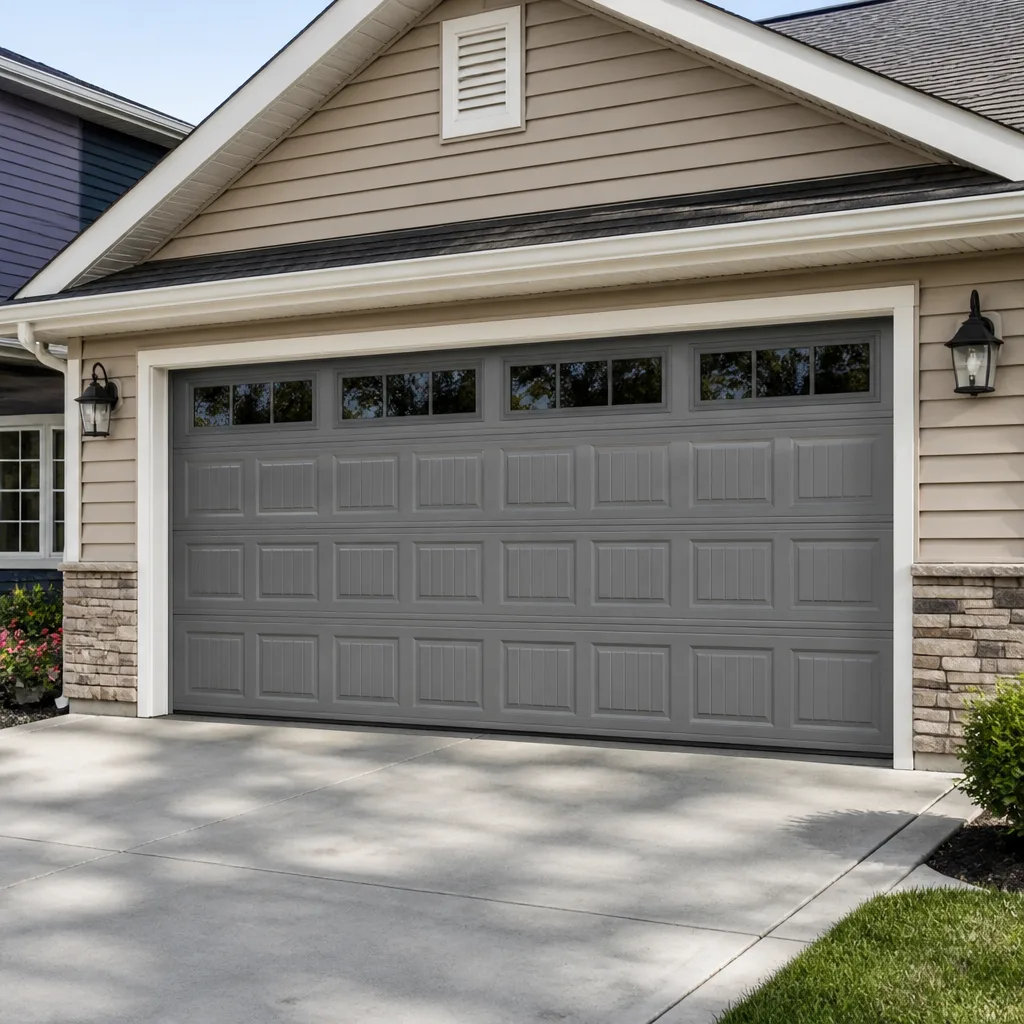 Raised-panel steel
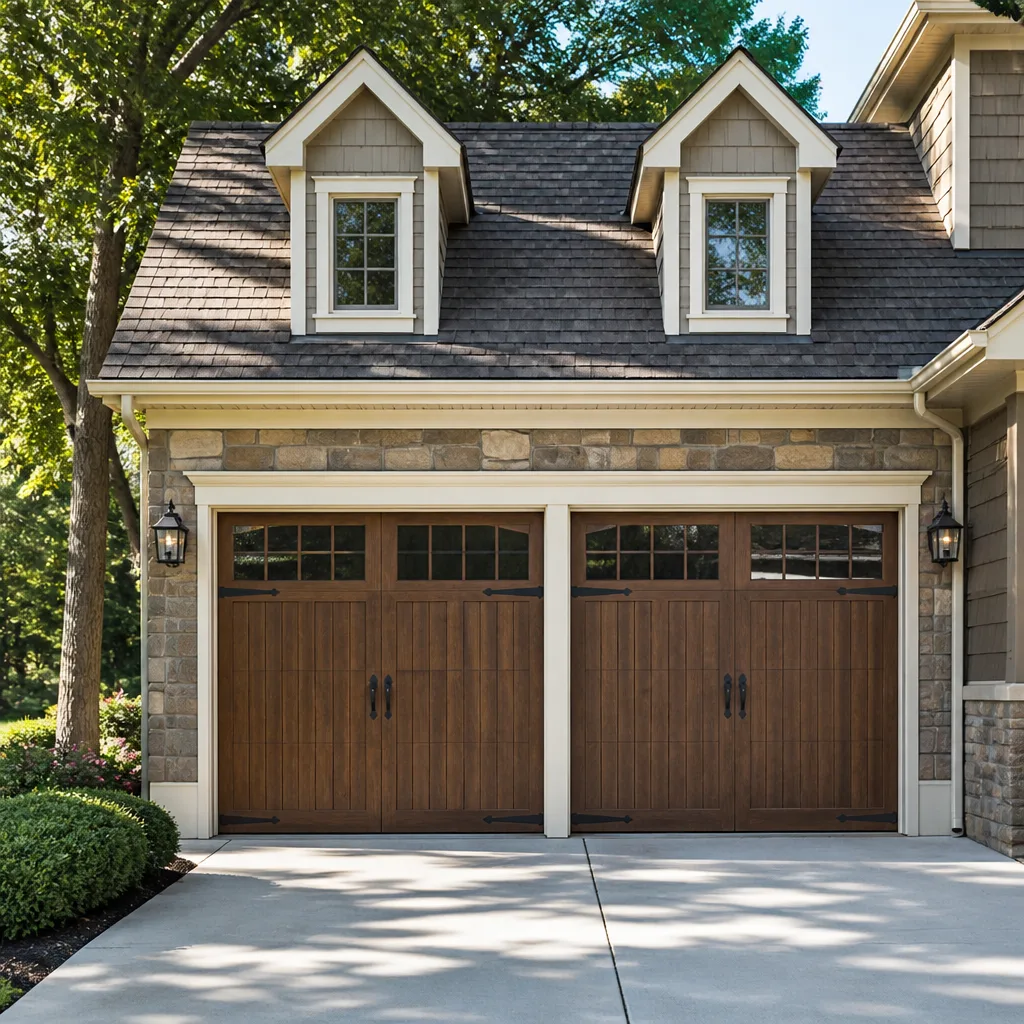 Carriage house
 Modern flush
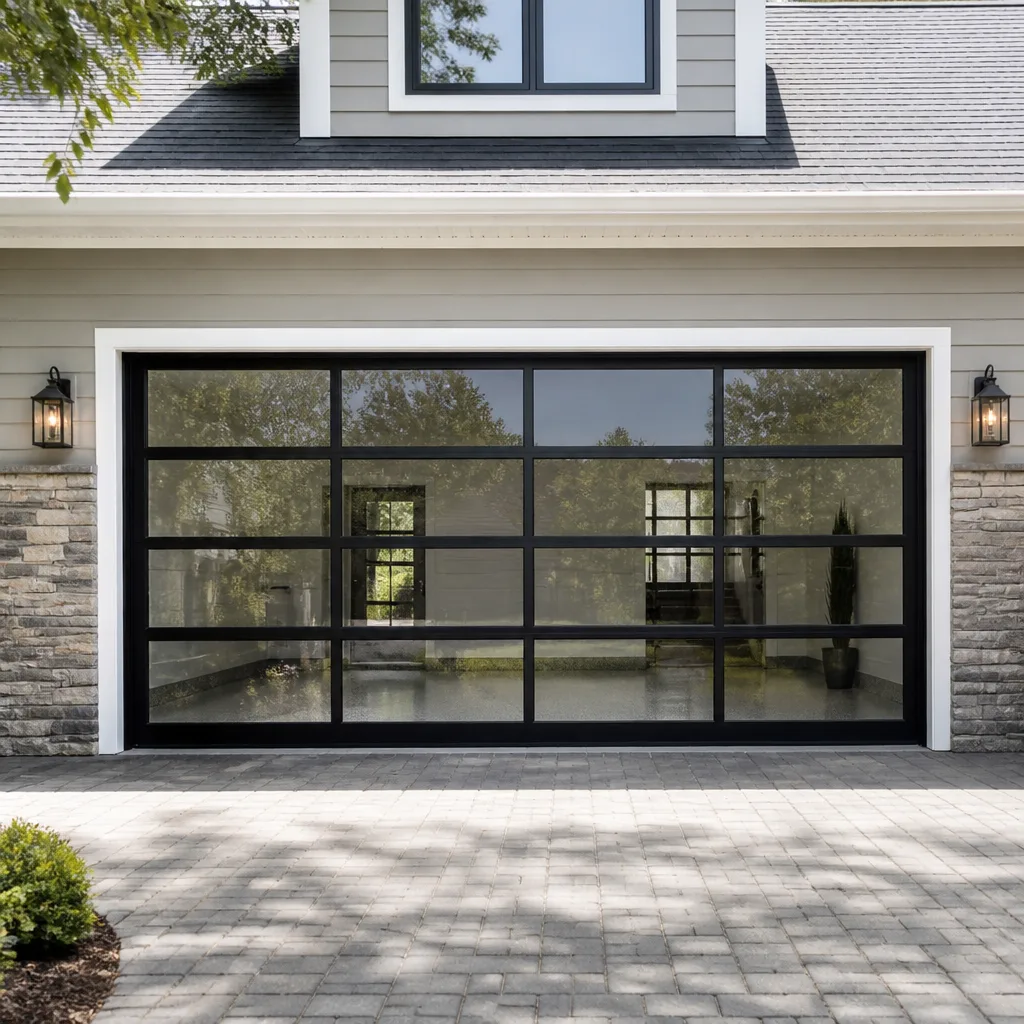 Full-view glass
 LiftMaster openers
 Chamberlain openers
Full 25-point door and opener safety check with every visit - springs, cables, rollers, tracks, and your LiftMaster or Chamberlain opener included
You get a price before we start. It does not change when the pro arrives.
Get your free estimateGarage Door Permits, Codes & Inspections in Westerville, OH: What You Need to Know
Most garage door work in Westerville needs no permit at all. That’s the part homeowners rarely hear, and it’s why the permit question gets muddled in both directions: some people pull paperwork they don’t need, and others knock out structural work that legally required an inspection. Swapping a dented panel, changing a remote, or replacing a bent roller is a cosmetic or mechanical repair. Cutting into the header framing to fit a taller door, converting to a different spring system, or adding a powered opener as part of a remodel is a different category entirely. This guide draws the line clearly: what triggers a permit in Westerville and Franklin County, how inspections work, what Ohio’s fire-separation rules mean for an attached garage, and why unpermitted work can snarl a home sale. You’ll finish knowing exactly which projects need a stamp and which don’t.
Quick Answer
In Westerville, OH, a permit is typically required when garage door work changes the door opening size, alters the structural header above the opening, or adds or modifies a powered opener as part of a larger remodel. Straight swaps of a door or panel of like size, spring replacements, and opener repairs on an existing door generally don’t need a permit. When in doubt, call the City of Westerville’s building department before work begins – the answer is free, fast, and saves you a paperwork headache later.
Styles & brands we work with
- Raised-panel steel
- Carriage house
- Modern flush
- Full-view glass
- LiftMaster openers
- Chamberlain openers
Table of Contents
- When Does Garage Door Work Need a Permit in Westerville?
- How Ohio Residential Code and Fire Separation Apply to Your Garage
- The Inspection Process: Westerville vs. Unincorporated Franklin County
- UL 325 Compliance and Older Opener Replacements
- Unpermitted Garage Work and a Westerville Home Sale
- Spring Systems, Structural Work, and Why Safety Matters
- Common Mistakes to Avoid
- When to Call a Professional
When Does Garage Door Work Need a Permit in Westerville?
The simplest way to think about it: permits track changes to structure and to the building envelope, not to the moving parts. A garage door is a machine bolted to a structural opening. Repair the machine, and you’re in ordinary maintenance. Change the opening, and you’ve touched the building.
Work that typically requires a permit
- Changing the opening size. Widening or heightening the rough opening means cutting structural framing and reframing the header. That’s structural work, and it needs a permit and inspection.
- Header or framing modifications. If a taller or wider door requires moving the header beam, adding jack studs, or reinforcing the wall above, plan on a permit. Any change to a load-bearing wall assembly falls here.
- New opener installation as part of a remodel. A standalone opener swap on an existing door is normally maintenance. An opener added during a remodel, addition, or garage conversion is usually reviewed as part of that project’s electrical scope.
- Converting a garage to living space. This touches fire separation, insulation, egress, and the door itself. Expect a full permit package.
- Adding a new garage door where none existed. Cutting a new opening into an existing wall is structural work, full stop.
Work that generally doesn’t need a permit
- Replacing a door with one of the same size and weight class, properly installed.
- Replacing torsion or extension springs, cables, rollers, hinges, or panels.
- Repairing or replacing an opener on an existing door with the same type of unit.
- Adjusting track alignment, travel limits, or safety sensor alignment.
This is the line we walk every week in Westerville. When we’re called for garage door repair, it’s almost always on the maintenance side of the line. When a job crosses into framing, we tell the homeowner to talk to the city first. That conversation costs nothing and prevents a real problem down the road.
How Ohio Residential Code and Fire Separation Apply to Your Garage
The Ohio Residential Code governs one- and two-family homes, and its fire-separation provisions apply directly to attached garages. Section R302 addresses separation between the garage and the house, and it’s the section most relevant to garage door and opener choices. Franklin County and the City of Westerville adopt the code with local amendments, and the building department is the authority on exactly what applies to your address.
What fire separation means for your door
An attached garage shares at least one wall and usually a ceiling or floor assembly with the living space. The code’s intent is to slow a fire’s spread from the garage into the house long enough for people to get out. Practically, that shapes several garage door decisions:
- The door between garage and house is a fire-rated assembly. If you’re replacing it, a standard hollow-core interior door doesn’t satisfy the requirement. This is separate from the overhead door itself, but it’s part of the same separation system.
- Self-closing hardware matters. The door from garage to house is expected to close on its own. If yours doesn’t, that’s a correction the inspector will flag.
- The overhead door’s material and construction matter for the garage wall. Insulation, glazing, and construction type affect how the assembly performs in a fire. A reputable installer will match the door to the wall and header it hangs from.
- Penetrations matter. Any hole cut through the separation for wiring, opener mounting, or framing gets sealed with an approved fire-rated material.
For homeowners in Westerville’s established neighborhoods, where garages sometimes sit under the house or share a wall with a bedroom, this is worth understanding before an installation. The door you pick affects the whole assembly, and the opening you cut gets inspected. If you’re also weighing an opener upgrade, our guide to garage door opener repair covers how the electrical side is handled on existing versus new installations.
The Inspection Process: Westerville vs. Unincorporated Franklin County
If your project needs a permit, the inspection is the finish line. The process runs in the same general order whether you’re inside Westerville city limits or in unincorporated Franklin County, but the department that issues the permit and schedules the inspection is different. Here’s the sequence in plain terms:
- Confirm jurisdiction. An address inside the City of Westerville falls under the city’s building department. A parcel in unincorporated Franklin County falls under the county. You can confirm your jurisdiction with a quick call to either office.
- Submit the permit application. Include the scope of work, the door or opener specifications, and drawings if the work changes framing. Manufacturer spec sheets go a long way toward a smooth review.
- Plan review. The department reviews the application for code compliance. This is the stage where lead times vary most, so the earlier you submit, the more schedule flexibility you keep.
- Schedule the inspection. Once the work is complete, you or your installer requests the inspection. The city or county schedules it according to its current workload.
- Inspection and sign-off. The inspector checks the framing, the opening, the door installation, and the electrical work if a new opener is part of the scope. Passing gives you a record of the work.
Here’s the honest part about turnaround: lead times in Westerville versus unincorporated Franklin County move around with department workload and season. We don’t quote specific day counts because they change, and a bad estimate on your calendar is worse than none. Instead, we schedule installations so the physical work is done when the inspection can happen – which usually means submitting paperwork early and planning the install around the review, not the other way around.
One more Westerville-specific note: the city and county share a border in places, and some neighborhoods are close enough to it that a neighbor across the street is in a different jurisdiction. Don’t assume your permit goes to the same office as the house across the road. Confirm your address, then proceed.
UL 325 Compliance and Older Opener Replacements
UL 325 is the safety standard for garage door operators. It covers entrapment protection – the safety technology that stops a closing door when it meets resistance or breaks a sensor beam. Modern openers from LiftMaster, Chamberlain, and Genie all meet the current standard. If your opener is older or has been repaired with mismatched parts, that’s a practical reason to replace rather than keep repairing.
What UL 325 covers in practice
- Primary entrapment protection. The safety reverse system – either a mechanical force limiter, a photocell sensor, or both.
- Secondary entrapment protection. Many modern openers include more than one layer: for example, an infrared sensor beam plus a force-based reverse system.
- Residential vs. commercial ratings. Residential openers are rated for residential use. A commercial-grade opener is a different unit, and putting a residential opener on a heavy or oversized door is a real problem, not a shortcut.
- Labeling. Openers carry a label showing compliance. If the label is missing or has been painted over, that’s worth knowing before a sale or inspection.
Practically, if you’re replacing an older opener in Westerville, choose a unit that meets the current standard and matches your door’s weight and size. If you have a LiftMaster or Chamberlain system already, brand-specific parts and features make the swap easier. Opener safety is one of those things most people ignore until it matters. Sensors that don’t reverse the door, a force limit set too high, or a missing paired sensor can all fail the entrapment test – and the fix is usually a qualified technician adjusting or replacing the opener, not a homeowner guessing at the settings.
Unpermitted Garage Work and a Westerville Home Sale
The permit issue usually surfaces at the worst possible moment: during a home sale. Here’s what actually happens when a buyer’s inspector or agent sees garage work that may not have had a permit.
What a buyer’s agent will look for
- Matches between the door and the file. If the door size, opener type, or framing doesn’t line up with what the city has on record, the buyer’s side will ask questions.
- Visible signs of re-working. New framing, patched drywall above the opening, or a fresh header are all things that catch a careful inspection.
- Open permits. A permit that was pulled and never closed can show up on the title or disclosure process. Some title companies will follow up on open permits before closing; others leave it to the buyer’s attorney.
What you can do about it
If you’re selling a Westerville home and garage work was done without a permit, you have options before the listing goes live. Start by asking the building department what the record shows for your address – the city can tell you whether a permit was ever issued. From there, you can pull a permit after the fact and get the work inspected, or document that the work didn’t require a permit in the first place. Either path is cleaner done ahead of a sale than discovered at the closing table. If the buyer’s side asks for a correction, you have room to plan instead of scrambling.
If you’re the one buying in Westerville, it’s fair to ask sellers for documentation on any garage door replacement or framing work done in the last several years. It’s an ordinary question, and a seller who did it right will be glad to hand over the paperwork.
Spring Systems, Structural Work, and Why Safety Matters
Garage door springs are the most dangerous part of the system. A torsion spring stores enormous energy, and when it fails, the release is violent. This is the reason garage door spring work is a job for trained technicians and not a weekend project. It’s also why spring work stays outside the permit scope in most cases – the danger lies in the work itself, not the paperwork.
What changes when you switch spring systems
- System type. Torsion and extension springs are different systems with different hardware. Converting from one to the other is a significant change, and the header and cable setup must match.
- Spring size and wire gauge. The right spring matches the door’s weight and cycle count. An undersized spring will fail early. An oversized one can overpower the door and put stress on the opener.
- Spring color coding. The paint on a torsion spring is a size code an experienced technician uses to match weight. If the paint is worn off, the tech measures the wire instead.
Why we treat spring repair as a specialist job
In our experience, the calls that scare us most are the ones where a homeowner has already tried to adjust or replace a spring and lost control of it. The system is under tension in both directions, and there’s no safe way to work on it without the right tools – winding bars, proper clamps, and a solid understanding of the door’s balance point. Our garage door spring repair work is handled by technicians dedicated to this system, and it’s the reason we treat spring work as one of the specializations the trade demands, not a general handyman task.
When a spring fails, the door usually won’t lift – or it lifts hard and drops fast. Don’t force it. Call for help, keep the door closed, and let the problem be diagnosed by someone who works on springs every week.
Common Mistakes to Avoid
- Assuming every replacement needs a permit. A same-size door swap or a spring replacement usually doesn’t. Pulling permits you don’t need costs time and money you don’t have to spend. Confirm with the city first.
- Assuming structural work doesn’t need one. Cutting a wider opening or adding a taller door without checking is the opposite mistake, and it’s the one that cost homeowners at sale time.
- Skipping the fire-separation details. Replacing the garage-to-house door with an unrated unit, or leaving the self-closer disconnected, is a code issue that will surface at inspection if not before. It’s easy to fix and easy to forget.
- Installing a residential opener on a door it wasn’t rated for. A heavy wood door or an oversized opening needs the right unit. Putting a light-duty opener on a heavy door is a reliability problem at best.
- Not keeping paperwork. A permit record, inspection sign-off, and manufacturer documentation are all assets at sale time. Keep them with the home’s records like you would a furnace service ticket.
- Assuming the county and city are the same. A Westerville address can fall under the city or unincorporated Franklin County. Confirm your jurisdiction before submitting anything, or you’ll start over.
- Attempting spring work to save a permit fee. Springs are outside the permit process and inside the danger zone. There’s no permit shortcut that makes this a safe DIY job.
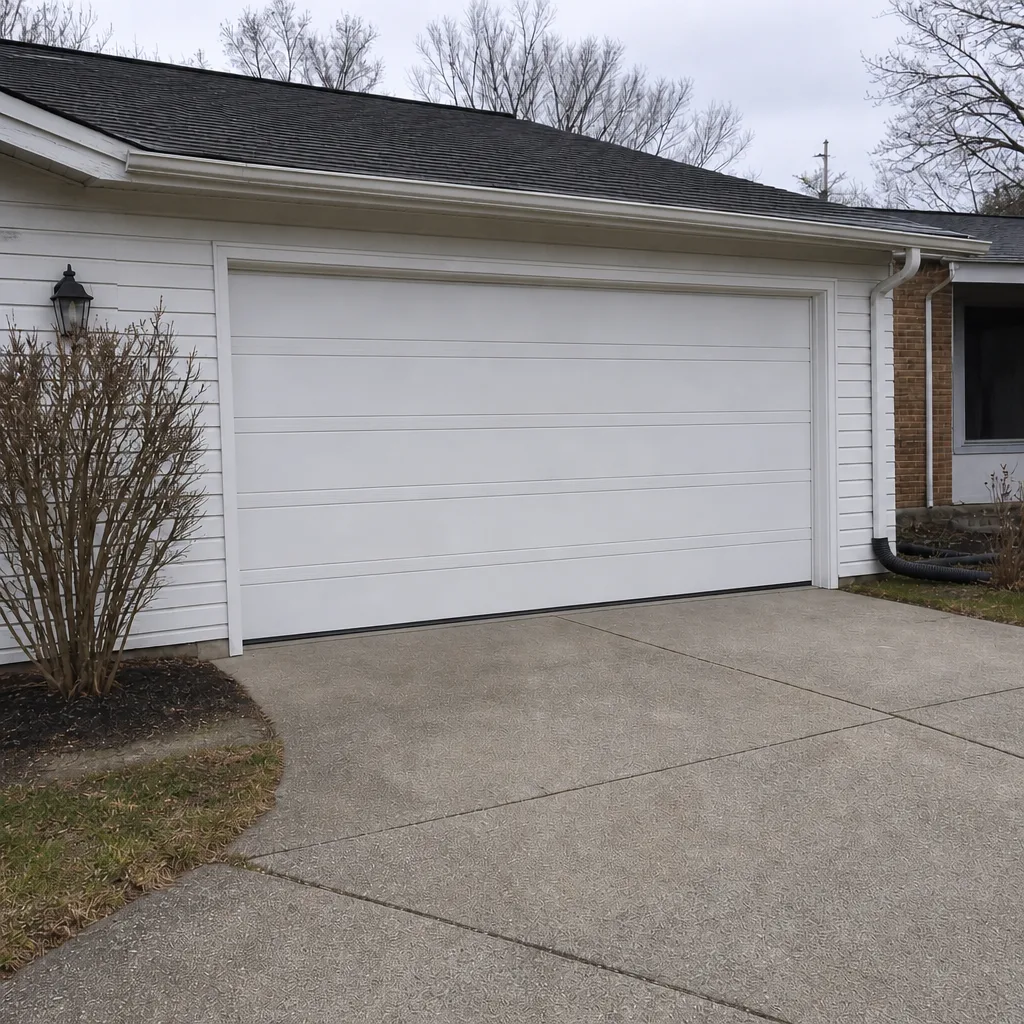
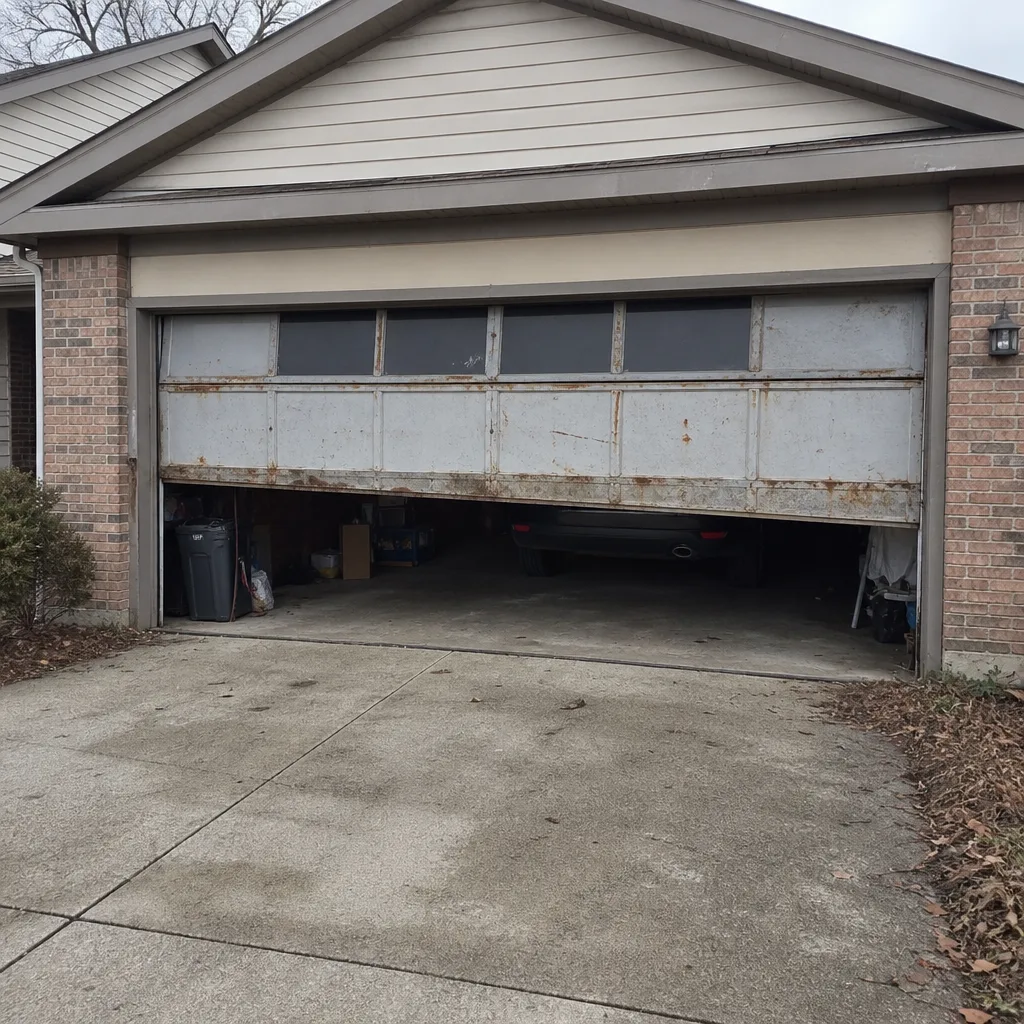
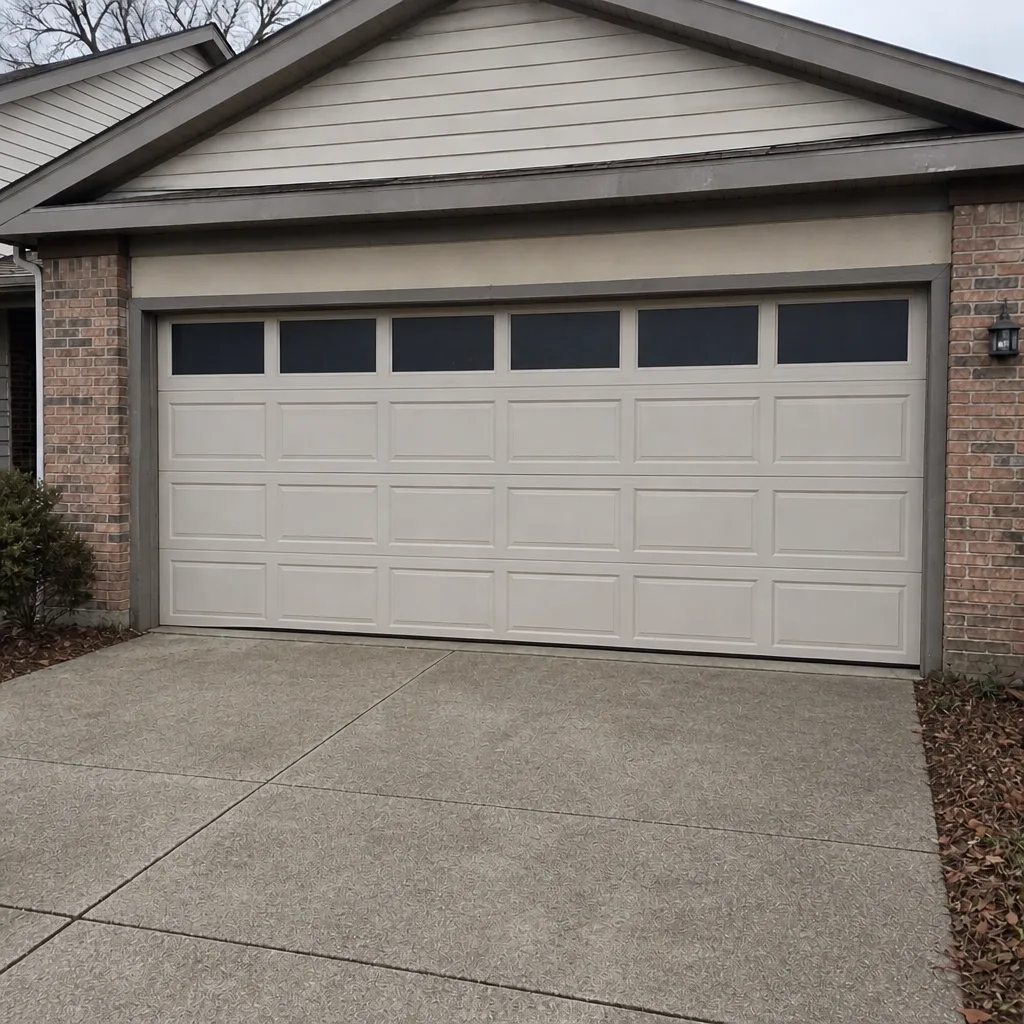
See the difference
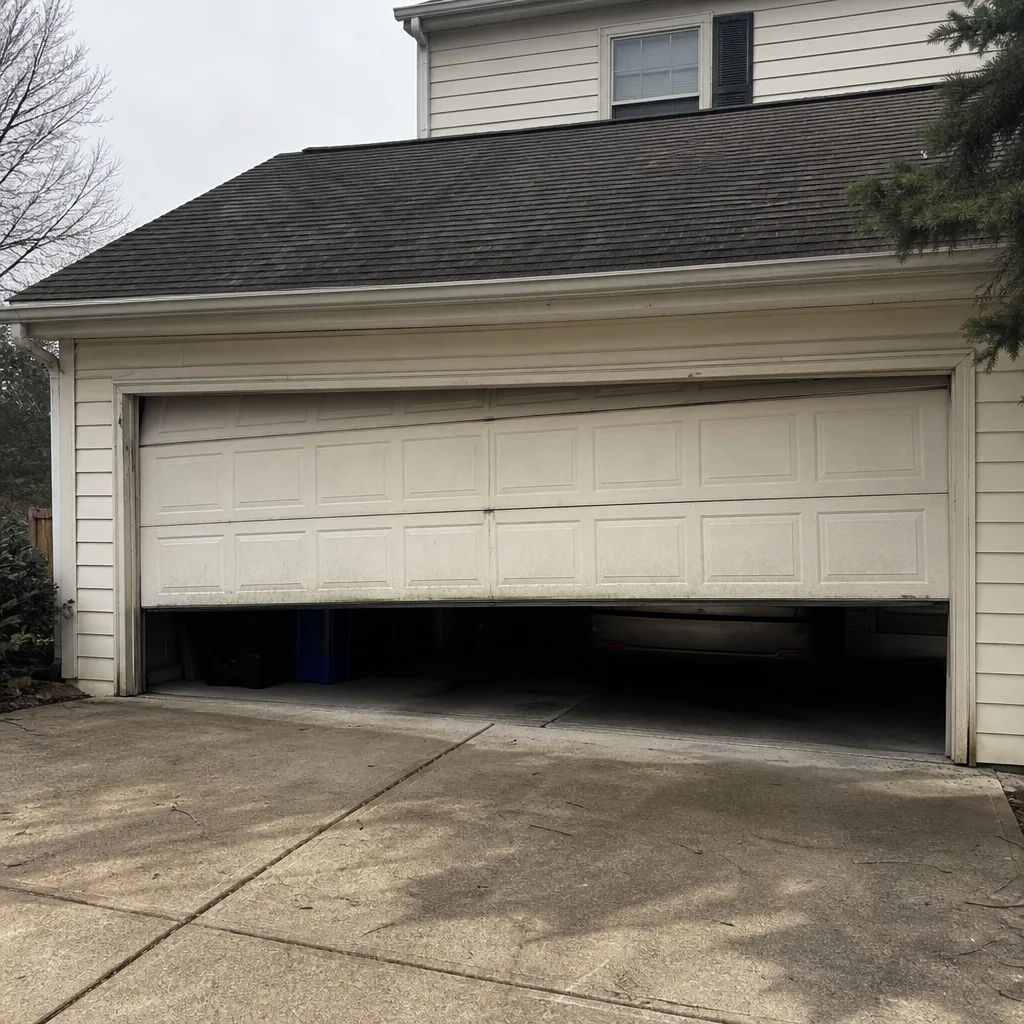 Before
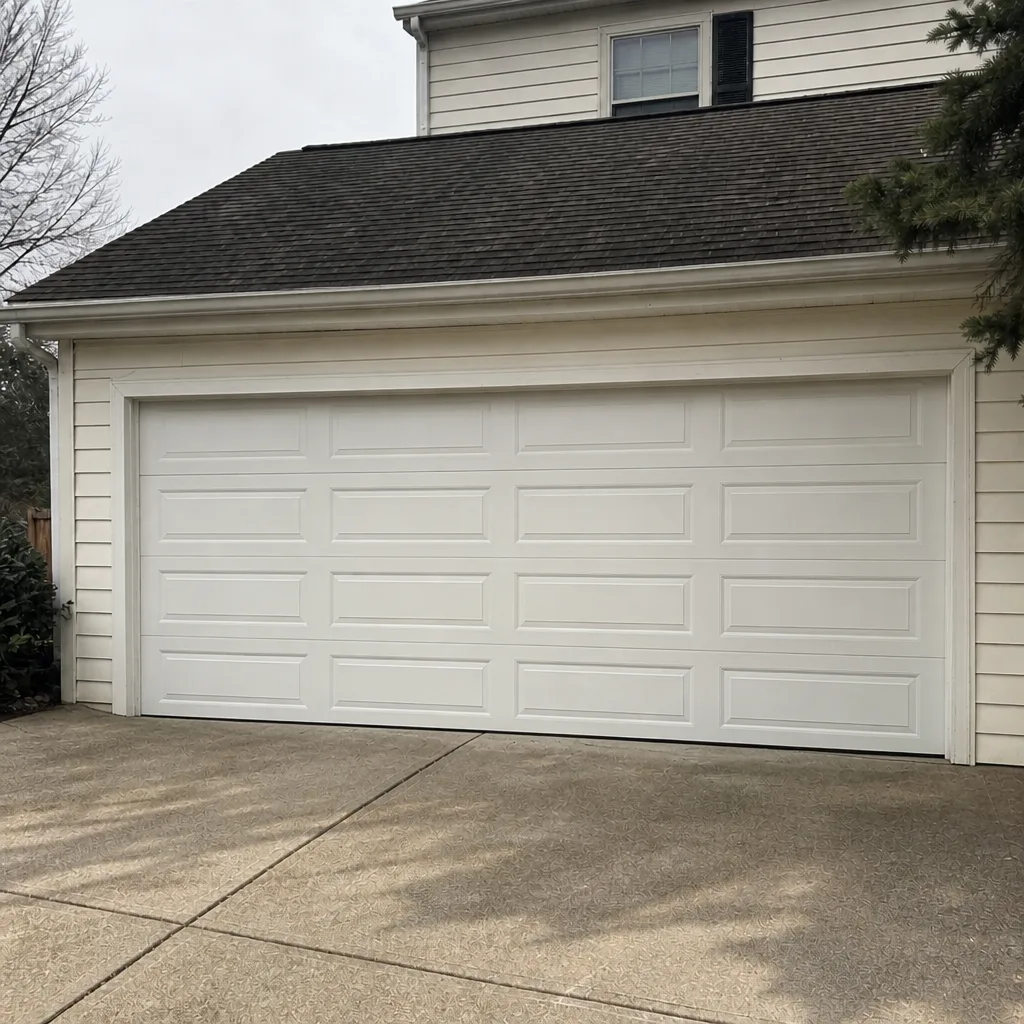 After
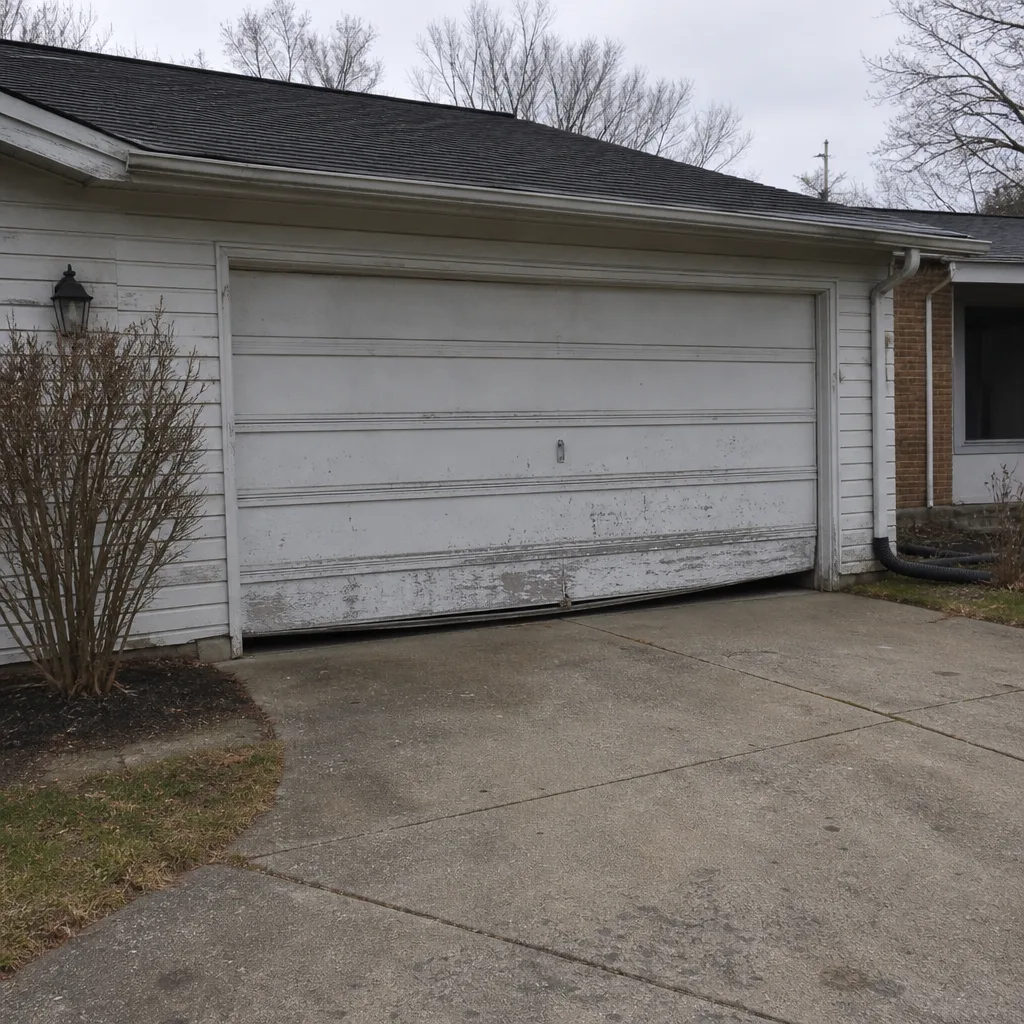 Before
 After
 Before
 After
When to Call a Professional
Some jobs are routine repairs, and some genuinely need trained hands on them. Call a professional when a spring is broken or visibly damaged, when the door is stuck open or off its tracks, when the opener stops mid-travel or reverses for no reason, and when the door is unbalanced or binds partway up. Call us before you start a project that changes the door opening, the header, or the opener type – we can tell you what the work involves and whether the city permits it for an inspection. Garage Door Repair Westerville offers free estimates in Westerville. Call (855) 771-0571 to schedule. We work with LiftMaster, Chamberlain, Genie, Clopay, Amarr, Wayne Dalton, Craftsman, and Raynor systems, and every technician focuses exclusively on garage doors. Our technicians have up to 9 years of experience.
Frequently Asked Questions
Usually no, if the new door is the same size and weight class as the old one and no framing changes. A permit is typically needed when the work changes the opening size, modifies the header, or is part of a remodel that includes a new opener. Call the City of Westerville building department to confirm; the answer is quick and free.
An opener swap on an existing door is usually maintenance and needs no permit. An opener added as part of a remodel, garage conversion, or addition is generally reviewed as part of that project. If your project is on the larger side, plan the opener into the permit scope from the start.
Plan review and inspection timing depend on the department’s current workload, so we don’t quote a specific number of days. The practical move is to submit the application as early as possible and schedule the physical work around the review, not the other way around. Call the City of Westerville or Franklin County directly for current lead times.
The issue can surface during the buyer’s inspection or the title and disclosure process. If the work required a permit and didn’t get one, you may need to pull it after the fact and get it inspected. Ask the building department what the record shows for your address, and start that conversation before the listing goes live.
Fire separation between an attached garage and the living space is governed by Ohio Residential Code Section R302, and the door between the garage and house is part of that separation. The garage-to-house door is expected to be a rated assembly that self-closes. Ask the Westerville building department for the exact requirement that applies to your home.
UL 325 is the safety standard for garage door operators, covering entrapment protection and safety reverse systems. Current openers from LiftMaster, Chamberlain, and Genie meet the standard. An older opener or one repaired with mismatched parts may not. If you’re unsure, a technician can check the safety reverse and sensor alignment on any brand we service.
The Bottom Line
Most garage door work in Westerville is maintenance, not permitting. Same-size door swaps, spring repairs, and opener replacements on an existing door usually go forward without a permit. The permits show up when the work touches structure – changing the opening size, modifying the header, or converting the garage to living space – or when a powered opener is added as part of a larger remodel. Confirm your jurisdiction with the City of Westerville or Franklin County, keep the paperwork, and keep your home sale clean. And for the parts of the job that are dangerous – springs, cabling, power – get a specialist involved. Garage doors are what we do, and we do them completely. Call (855) 771-0571 for a free estimate.
For any work that starts from a broken door, stuck door, or failed opener, call Garage Door Repair Westerville directly and we’ll get you scheduled.
Written by the team at Garage Door Repair Westerville.